Mold Remediation Houston is a free referral service, not a mold company, and it has no crews or inspectors of its own. When you call, you are routed to an independent local mold remediation company or mold assessment consultant serving your area, who talks through the problem with you and sets their own price. Call the number on this page to be connected with a local mold remediation company in Houston.
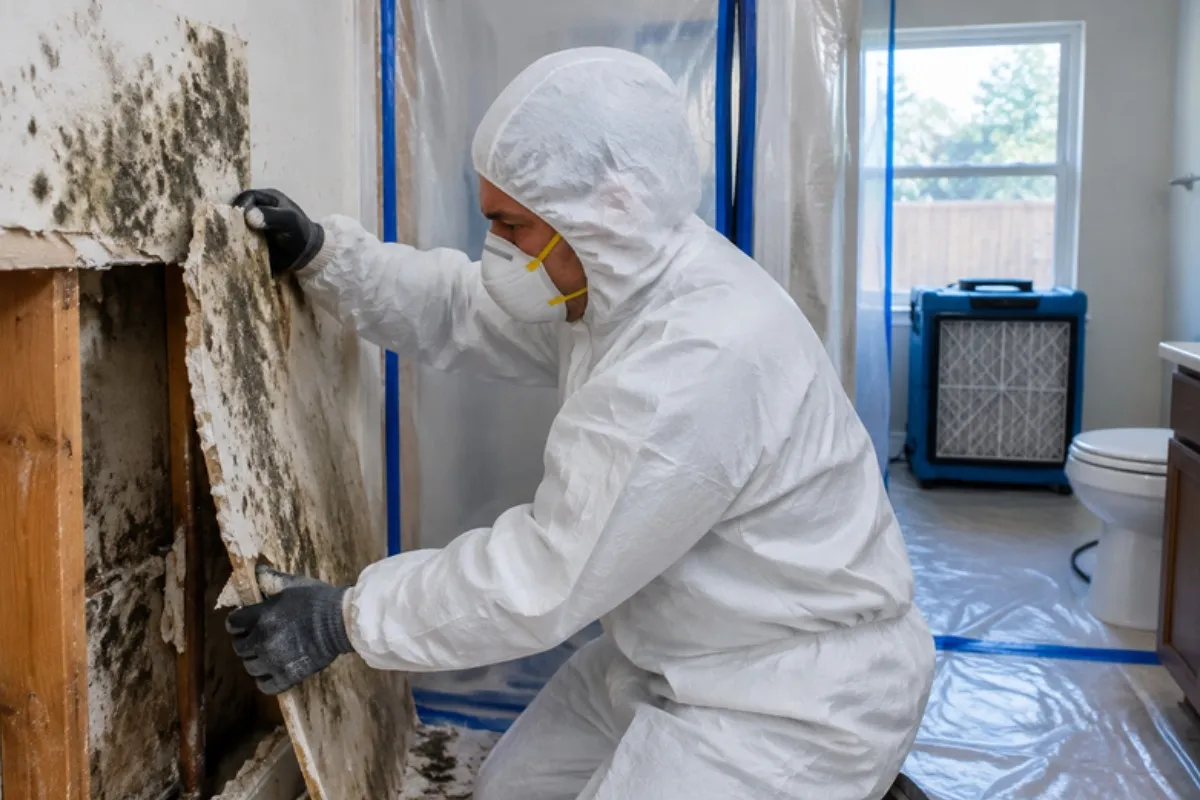
Mold services in Houston
What happens when you call
The number on this page connects you with an independent business that takes mold jobs in Greater Houston. It helps to have a few details ready: where you see or smell the mold, about how big the area is, what got wet (a roof leak, a plumbing drip, an AC drain pan, floodwater) and how long it has stayed damp. The company you reach decides whether a visit makes sense, explains how it works and quotes its own price. You are under no obligation to hire anyone, and any job is an agreement between you and that company.
Why Houston homes grow mold
Houston's long, hot and humid summers mean the air conditioning runs most of the year. Cold ducts, air handlers and supply vents can sweat, and a clogged condensate line can overflow a drain pan in the attic and soak the ceiling or wall below. EPA recommends keeping indoor humidity below 60 percent and keeping AC drip pans clean and drain lines flowing. It also says not to run an HVAC system you suspect is contaminated, since it can spread mold through the house.
Water from outside is the other half of the story. Houston sits on flat, slow-draining ground crossed by bayous such as Buffalo Bayou and White Oak Bayou, and heavy tropical rain can flood streets and homes quickly. During Hurricane Harvey in 2017, the Houston Health Department reported that many areas outside the mapped floodplain took on several feet of water, and its inspectors checked flooded homes for conditions such as mold in walls or floors. EPA's rule of thumb after any flood: if wet materials could not be dried within 24 to 48 hours, assume mold is growing.
How Texas regulates mold work
Texas licenses mold assessment and remediation through the Texas Department of Licensing and Regulation (TDLR). Anyone you pay to inspect, test or remove mold needs a TDLR mold license unless an exemption applies, and homeowners can always clean mold in their own home. On the same project, the company that does the assessment cannot also do the remediation; that is state law. In practice:
- A mold assessment consultant inspects and gives you a written protocol at least one calendar day before work starts, covering the areas, containment, methods and clearance criteria.
- A separate company that holds a TDLR mold remediation contractor license follows that protocol and its own written work plan.
- The consultant does a post-remediation assessment to confirm the work passed.
- Within 10 days you receive before-and-after photos and a Certificate of Mold Damage Remediation (CMDR). It can help with homeowners insurance underwriting, and if you sell, you must give buyers copies of any CMDR from the past five years.
Before hiring, check each company and individual on TDLR's license search or call TDLR at 1-800-803-9202.
What it costs in Houston
| Service (Angi's Houston cost data) | Average | Typical range |
|---|---|---|
| Mold removal | $2,016 | $863 to $3,329 |
| Mold inspection and testing | $453 | $355 to $563 |
Because Texas separates assessment from remediation, most homeowners pay two companies. Price moves with the size of the affected area, how much drywall, insulation or flooring has to go, attic or duct access, and whether flood damage is involved. EPA says sampling is usually unnecessary when mold is visible, so ask what any test will tell you before paying for it.
If you rent
This is general information, not legal advice. Under Texas Property Code 92.052, a landlord must make a diligent effort to repair a condition that materially affects an ordinary tenant's health or safety once the tenant gives notice and is current on rent. TexasLawHelp suggests putting the notice in writing and sending it by a tracked method. In Houston, apartment and housing problems such as water leaks can be reported through 311.
Where calls are connected
The service covers Houston and Harris County along with Fort Bend, Montgomery, Brazoria, Galveston, Chambers, Liberty and San Jacinto counties. EPA says mold can irritate the eyes, skin, nose, throat and lungs, and people with asthma or weakened immune systems should stay away from moldy areas. Talk with a health professional about any health concerns.
Cities and towns we connect callers in
Harris County
Fort Bend County
Montgomery County
Brazoria County
Galveston County
Liberty County
Common questions
Is Mold Remediation Houston a mold company?
Why does Texas require two different mold companies?
How much mold can I clean up myself?
Which areas does the service cover?
Guides
Sources
- EPA: Mold Cleanup in Your Home
- EPA: A Brief Guide to Mold, Moisture and Your Home
- EPA: Mold Information Slideshow (testing and sampling)
- EPA: Homeowner's and Renter's Guide to Mold Cleanup After Disasters (pdf)
- TDLR: Mold Assessors and Remediators FAQs
- TDLR: Texas Mold Assessors and Remediators Law
- TDLR: License Search
- 16 Tex. Admin. Code 78.150: Certificate of Mold Damage Remediation
- Tex. Prop. Code 92.052: Landlord's Duty to Repair or Remedy
- TexasLawHelp: Mold and Renter's Rights in Texas
- Angi: Mold removal cost in Houston, TX
- Angi: Mold inspection and testing cost in Houston, TX
- Houston Health Department: Hurricane Harvey response report
- City of Houston: Department of Neighborhoods
Last updated: